
Turbinate reduction, septoplasty: any surgery that removes tissue in your nose is permanent, and none of them is free of risk.
Before going under the knife, look for the option that touches your nose the least. And if surgery is really needed, find the smallest correction that does the job.
First, expand instead of cutting
In case of nasal obstruction, maxillary expansion (MSE) is often the option to consider first: it widens the nasal cavity without touching the turbinates or the mucosa. It is usually done by a maxillofacial surgeon.
It does not suit every case, and it has its own constraints. But it keeps all the tissue that warms, humidifies and senses the air you breathe.
Nasal obstruction? Don't cut turbinates! Expand the maxilla instead →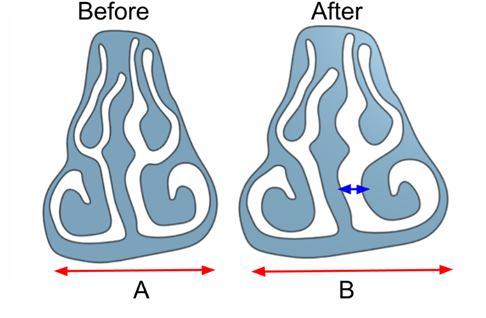
Every millimetre counts
Reducing the volume of the turbinates, even a tiny bit, can lead to symptoms of Empty Nose Syndrome: the nose is open, but the air no longer feels right.
There is always a risk, however minimally invasive the surgery is. Nobody can predict who will develop ENS.
If surgery is really needed: as little as possible
Find where the air is blocked
An airflow simulation (CFD) of your own nose, from your CT scan, shows exactly where the airflow is obstructed. It is not always where you would expect.
Try the smallest correction
With a virtual surgery, I modify the 3D model of your nose at that precise spot, instead of removing tissue "just in case".
See the before and after
A second simulation shows what the correction would change. You bring an objective document to your surgeon.
A real case
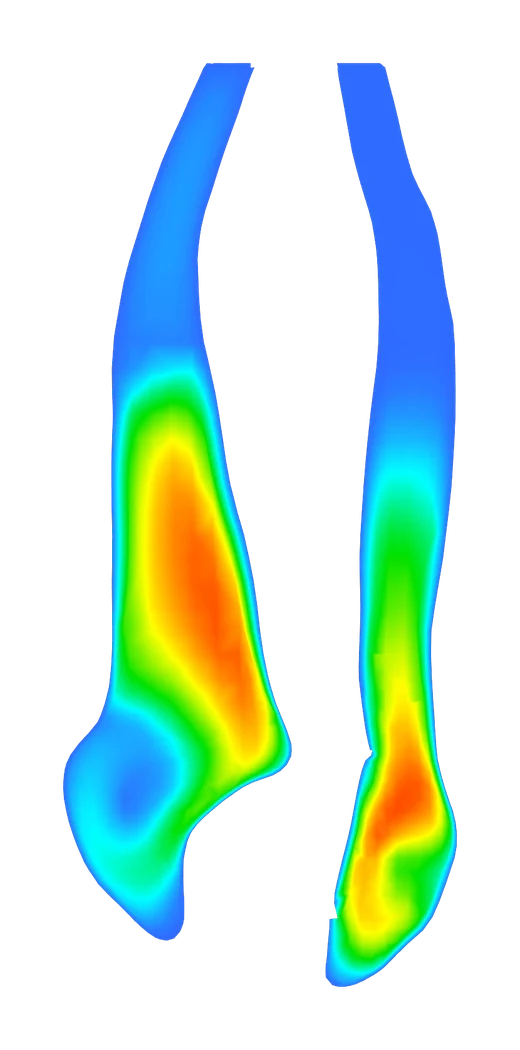
A patient with a blocked nose. The simulation showed that the airflow was obstructed at one precise spot. A small, localised reduction of the septum at that spot was tested with a virtual surgery, without touching the turbinates. The opening is only 2 to 3 mm wide and 20 mm long: a minimally invasive correction.
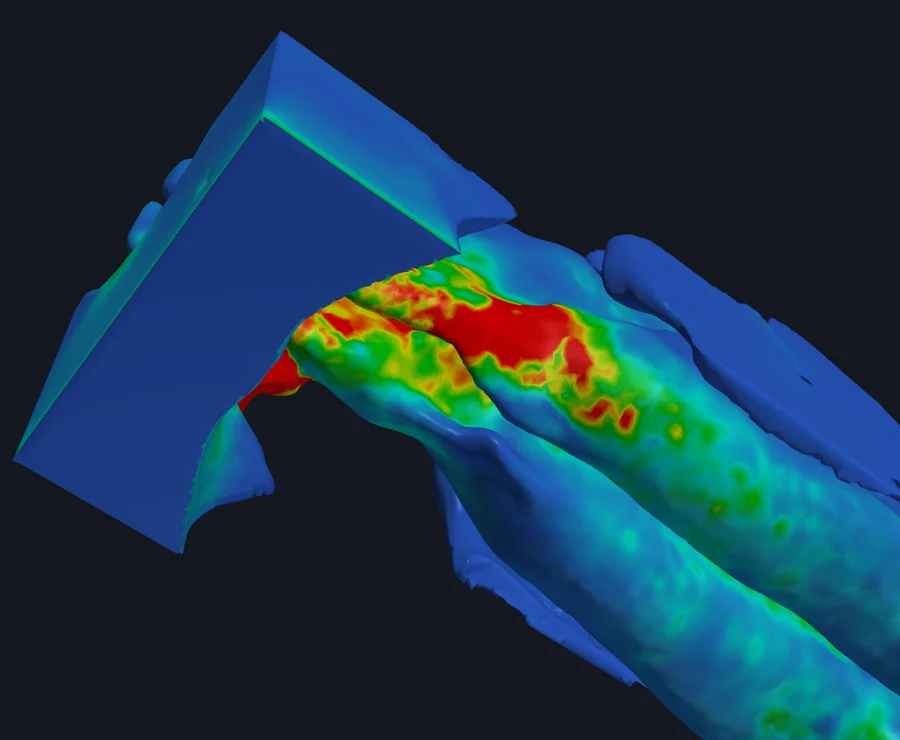
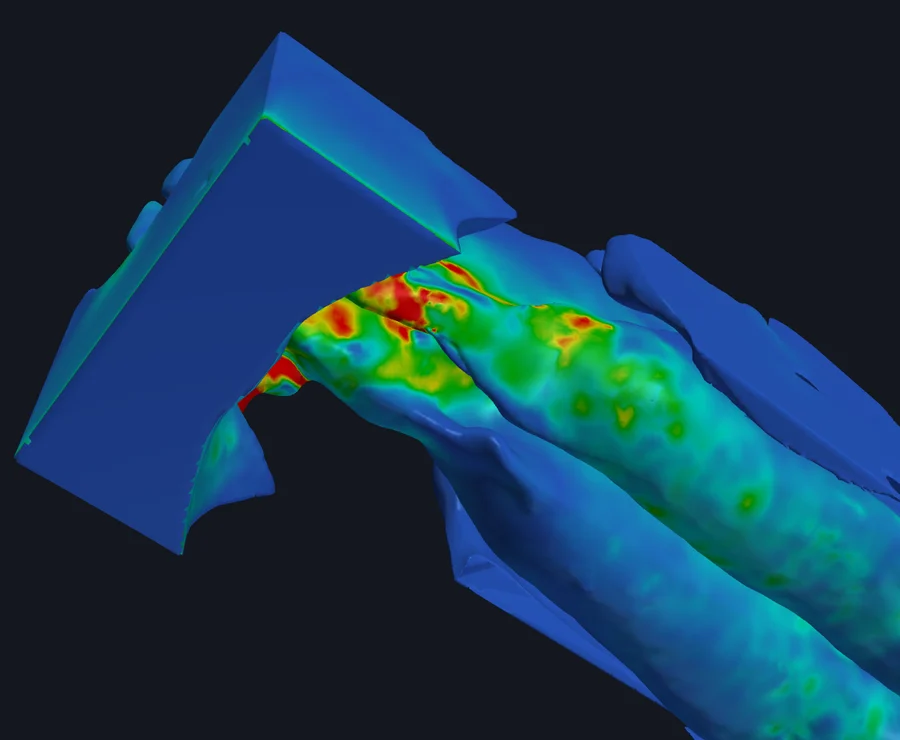 BeforeAfter
 Narrow passage
 Widened
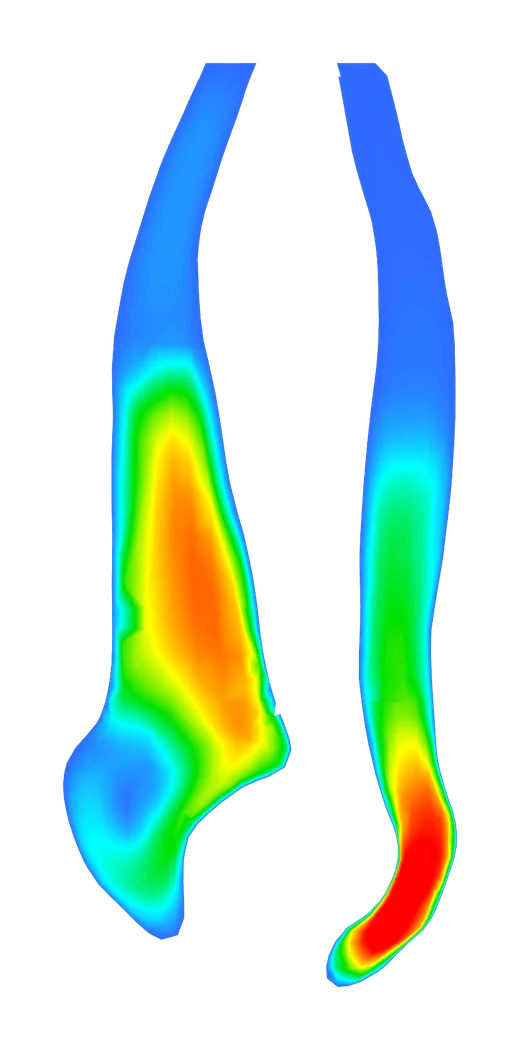
Air velocity: slow fast
| Figure | Before | After |
|---|---|---|
| Nasal resistance | Reference | −19% |
| Airflow right / left | 65% / 35% | 60% / 40% |
In this simulation, widening one precise spot by 2 to 3 mm would lower the nasal resistance by about 19%, and the air would split more evenly between both sides. Even a correction this small is not free of risk: it is a basis for discussion with a surgeon, not a recommendation.
How it works
From your CT scan to a before-and-after report
Questions
Is maxillary expansion (MSE) an option for adults?
Often, yes. In adults, the expansion is usually anchored in the bone with mini-screws, sometimes with surgery. It is done by a maxillofacial surgeon. It does not suit every case, but it does not remove any nasal tissue. Read more →
Can a small turbinate reduction cause ENS?
It can. ENS has been reported after all kinds of turbinate surgery, including the least invasive ones. Nobody can predict who will develop it, which is why every millimetre counts.
Can a simulation tell me if I need surgery?
No. It shows where the air flows and what a correction would change. Only a doctor can decide whether you need surgery.