 Written byAurélien RUMIANO
简介
按照计划,我在鼻腔内设计了虚拟植入物,以改善气流分布并减小横截面积,使其趋近于健康鼻腔。
虚拟植入物的放置

In red are the virtual implants that I designed, you can see that I added a lateral wall implant behind the existing one on the right side. It measures approximately 30 mm long, 10mm high, and 5mm thick.
On the other side, we can say that it is two implants, a floor, and a lateral wall implant.
The floor implant measures approximately 35 mm long, 6mm wide, and 3 mm thick.
And the lateral wall implant is 35 mm long, 10 mm high, and 2 mm thick.
So I don’t know if it is even possible to add an implant behind the existing one but I think that it is a good idea to keep the cross-sectional area constant all along the right side.
On the left side, I added two implants which aim to reduce the space between the existing inferior turbinates and the walls.
横截面积变化
可以看到,变化从距离鼻孔 40 mm 处开始,一直到 70 mm。现在最大值约为 400 mm²,而不是 500 mm²,但距离健康鼻腔仍然很远。所以我们已经可以说,植入物还不够大。但我的第一个目标是尝试改善气流分布,并保持横截面积不变。
结果


我们可以很快看到,气流分布和速度几乎没有变化。下鼻道中的气流可能稍微多了一些,但变化并不明显。
虚拟植入物前
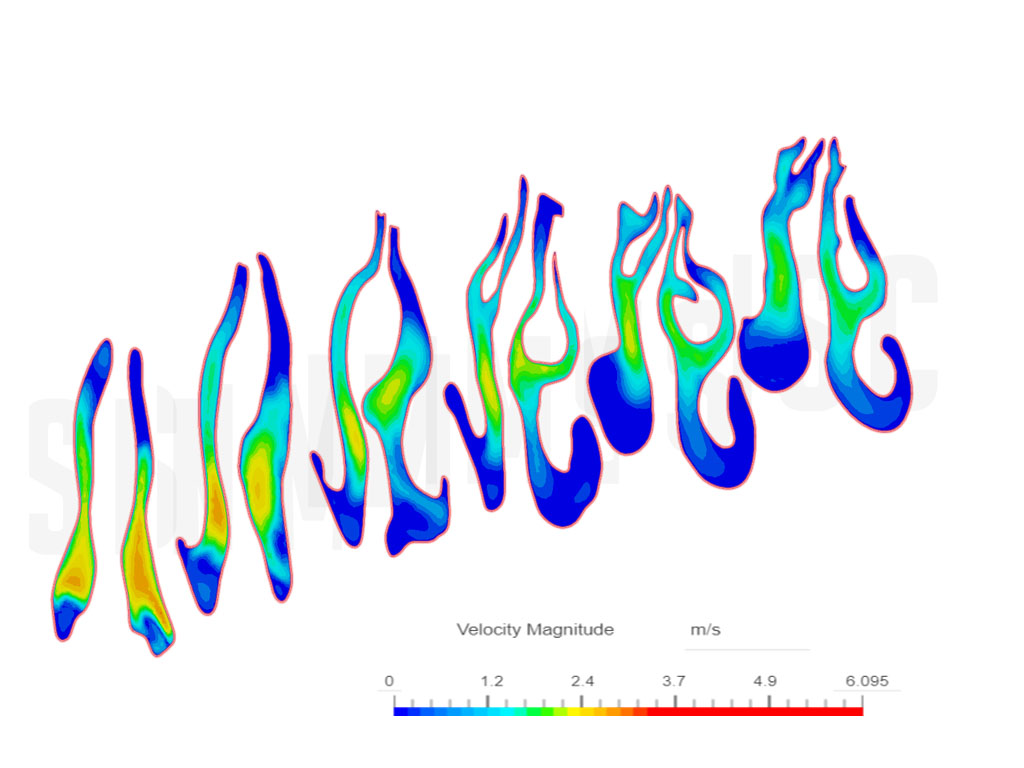
虚拟植入物后

在切片视图中,如果比较虚拟植入物前后,我们同样看不到气流速度有任何明显差异。


我在两个 3D 模型(虚拟植入物前后)中,以距离鼻孔相同的位置制作了切片,并放置了一个点来测量同一位置的速度。虚拟手术后,速度约高出一倍,为 0,26 m/s,而虚拟手术前的 3D 模型中为 0,14 m/s。但这只是一个很小的区域,我们可以看到颜色发生了变化,速度确实高了一倍,但 0,26 m/s 相对于例如绿色所代表的 2 m/s 仍然是非常低的速度。因此我推测,就气流感觉而言,这种变化几乎无法察觉。
结论和下一步
So what I can say with those data is these virtual implants have almost changed nothing in the velocity and the airflow distribution. It’s possible that if these implants were done in reality I would feel almost no improvements. But one thing, ENS symptoms are not just due to airflow problems, there is also the health of the mucosa, the nasal cycle which is almost dead with cutted turbinates and maybe others things to take into account.
下一步是什么?
Find better implants placement, also maybe bigger implants to decrease cross-sectional area … I don’t know.
Recreate true turbinates… Ok it is not possible in reality.