 Written byAurélien RUMIANO
はじめに
まず、Flowgyとは何でしょうか? Flowgyは、鼻腔のCFDとバーチャル手術のためのツールを備えたソフトウェアです。この記事では、私が業務用ソフトウェア(OnshapeとSimscale)で得た結果と、Flowgyで得た結果を比較します。ソフトウェアを貸してくださり、すべての質問に答えてくださったManuel Burgos教授に感謝します。


両方のソフトウェアで最大速度を3,25 m/sに設定しました。ほとんどの気流が中鼻道を通過しているという、同じ結果が見て取れます。Flowgyでは、何が起きているのかをより明確に見るため、左側の鼻腔内の気流だけを表示している点に注意してください。
Cuts – Velocity
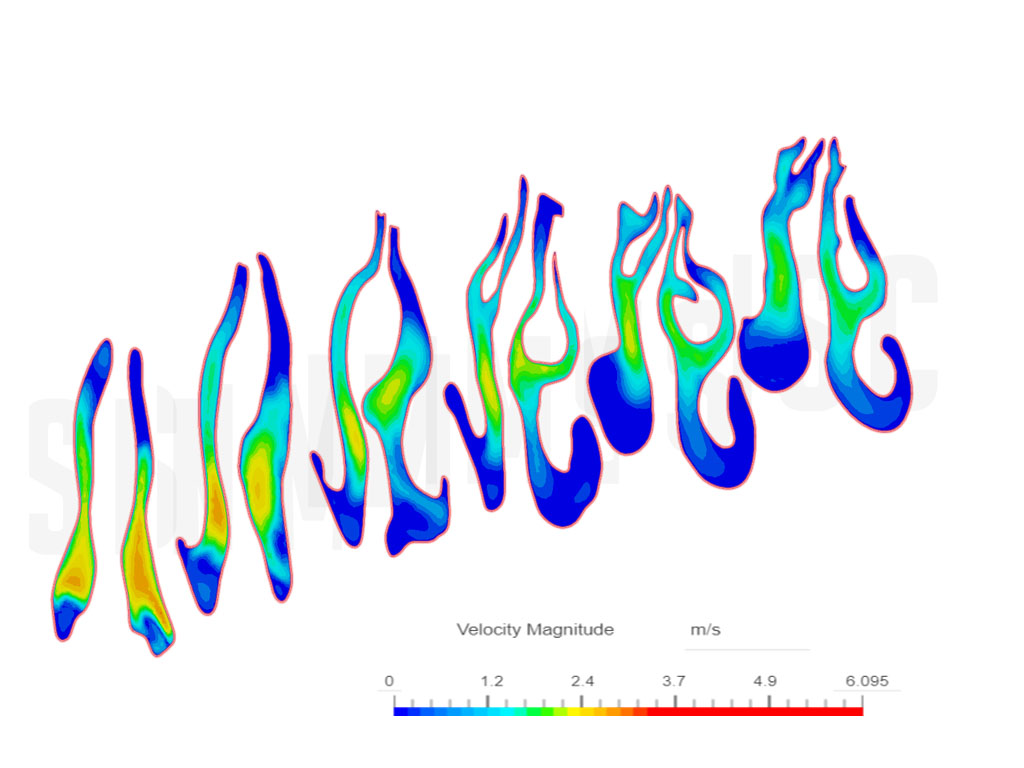

The main difference in the two views is the max speed, it is set at 3,5 m/s in Simscale and 2,5 m/s in Flowgy because I was not able to set 3,5m/s in Flowgy. But we can roughly see the same thing, the speed of the airflow is very lower in the inferior meatus. It’s reassuring to see the same thing because it means that the 3d model I drew of my nasal cavity was quite accurate.
壁面せん断応力
さて、Flowgyで本当に興味深いのは、他にも利用できるデータがあることです。その中でも、ENSの文脈で特に興味深いのが、壁面せん断応力(WSS)です。WSSについては、他の記事でもすでに触れました。ここでは、WSSとは何か、そしてENSの文脈でなぜ特に興味深いデータなのかを、もう少し説明します。WSSとは、気流が壁面に及ぼす圧力で、単位はパスカル(Pa)です。壁面付近の速度勾配が大きいほど、WSSも大きくなります。気流の感覚を生み出すのがWSSであるため、重要な値です。


1 Paを超える圧力は赤で表示されています。最大WSSは主に前方部分と中鼻道に位置しており、気流の速度と対応していることがわかります。そこで、中鼻道と下鼻道の間でWSSをより均等に分布させたいと考えています。次の記事では、バーチャルインプラントを使ってこれを試みます。
気流の湿度

この表示では気流の湿度が示されています。もちろん、鼻腔を通過するにつれて湿度が上昇していることがわかります。最後の断面では、気流の一部が湿度92%になっていることが見て取れます。値はおそらくあまり正確ではありません。シミュレーションパラメータのデフォルトでは、粘膜の湿度は100%に設定されていますが、ENSのために粘膜が乾燥していることが多い現状を考えると、少し楽観的です。一方、吸気の湿度は20%に設定されており、外気はこれより湿っていることが多いため、悲観的な設定です。興味深いのはバーチャルインプラントの前後比較なので、入力パラメータはそれほど重要ではありません。
気流の温度

Same thing here with the temperature of the airflow, in the simulation parameters the mucosa is set at 309,65°K which is 36,65°C. The inhaled air is set at 21,15°C. The temperature of the mucosa is also maybe a little optimistic in the context of ENS. I think the entrance to the nose is colder than that due to the lack of mucosa. But I can’t quantify it and it will depend on the aggressiveness of the turbinectomy. In this illustration, the minimum temperature is set at 300°K (27°C) in blue.
結論、次は?
Flowgy gives us really interesting data which will be valuable to compare before and after the addition of virtual implants. I’ll talk about it in the next article, but I think it’s no longer possible to do nose surgery in 2022 without first having done a virtual surgery to see what it will give in terms of airflow, WSS, etc …
Now I will try to design virtual implants in order to improve airflow distribution, WSS distribution, etc …