 Written byAurélien RUMIANO
Inleiding
Allereerst, wat is Flowgy? Flowgy is software voor CFD van de neusholte, met hulpmiddelen voor virtuele chirurgie. In dit artikel vergelijk ik de resultaten die ik met mijn industriële software (Onshape en Simscale) heb verkregen met de resultaten van Flowgy. Ik wil Pr Manuel Burgos bedanken voor het uitlenen van de software en het beantwoorden van al mijn vragen.


Ik heb in beide softwareprogramma's de maximumsnelheid ingesteld op 3,25 m/s. We zien hetzelfde: het grootste deel van de luchtstroom gaat door de middelste neusgang. Merk op dat ik in Flowgy alleen de luchtstroom in de linker neusholte heb weergegeven om duidelijker te kunnen zien wat er gebeurt.
Cuts – Velocity
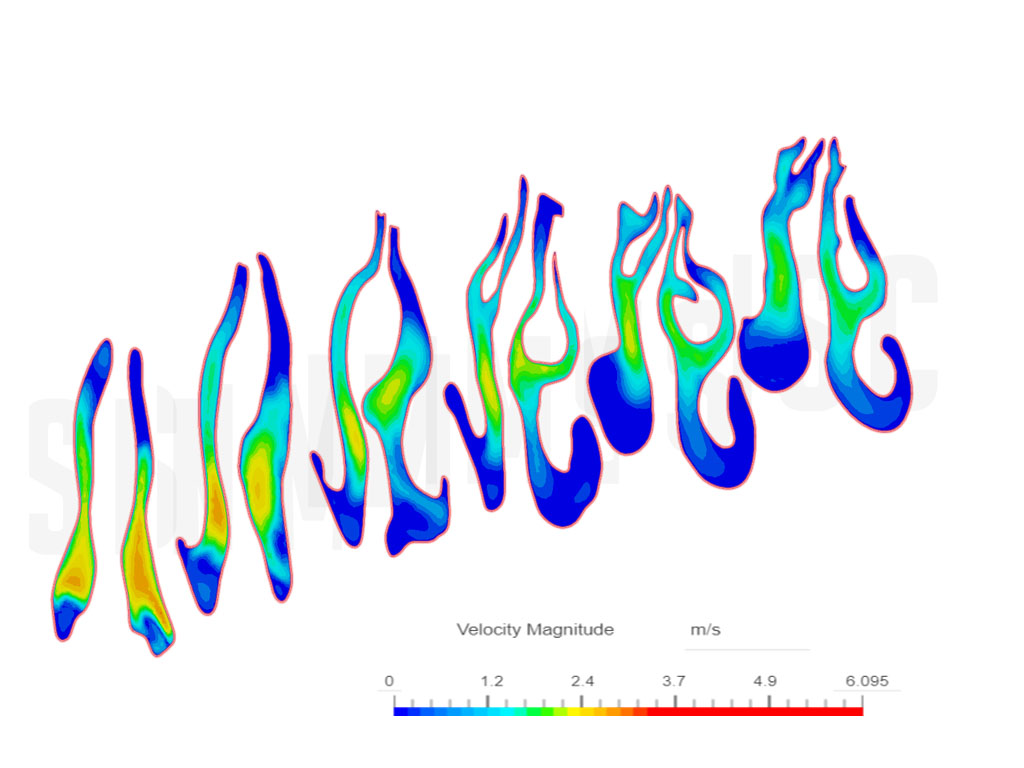

The main difference in the two views is the max speed, it is set at 3,5 m/s in Simscale and 2,5 m/s in Flowgy because I was not able to set 3,5m/s in Flowgy. But we can roughly see the same thing, the speed of the airflow is very lower in the inferior meatus. It’s reassuring to see the same thing because it means that the 3d model I drew of my nasal cavity was quite accurate.
Wandschuifspanning
Het echt interessante aan Flowgy is nu dat er andere gegevens beschikbaar zijn. Een daarvan is bijzonder interessant in de context van ENS: de Wall Shear Stress (WSS). Ik heb WSS al in andere artikelen genoemd. Ik zal iets meer uitleggen over wat WSS is en waarom dit gegeven bijzonder interessant is in de context van ENS. WSS is de druk die de luchtstroom op de wanden uitoefent; de eenheid is de pascal (Pa). Hoe groter de snelheidstoeslag nabij de wand, hoe hoger de WSS. Het is een belangrijke waarde, omdat de WSS het gevoel van de luchtstroom veroorzaakt.


De druk boven 1 Pa wordt rood weergegeven. We zien dat de maximale WSS zich voornamelijk in het voorste gedeelte bevindt, en ook in de middelste neusgang, wat overeenkomt met de snelheid van de luchtstroom. We willen dus een betere verdeling van de WSS tussen de middelste en onderste neusgang. Dat zal ik in het volgende artikel proberen te bereiken met virtuele implantaten.
Luchtvochtigheid

In deze weergave wordt de luchtvochtigheid van de luchtstroom weergegeven. We zien natuurlijk dat deze toeneemt naarmate de lucht door de neusholte stroomt. In de laatste doorsnede zien we dat een deel van de luchtstroom een luchtvochtigheid van 92% heeft. De waarden zijn zeker niet erg nauwkeurig. Standaard is het slijmvlies in de simulatieparameters ingesteld op 100% luchtvochtigheid, wat een beetje optimistisch is aangezien we door ENS vaak een droog slijmvlies hebben. Tegelijkertijd is de waarde van de ingeademde lucht ingesteld op 20% luchtvochtigheid, wat pessimistisch is, omdat de buitenlucht vaak vochtiger is dan dit. Interessant wordt vooral de vergelijking vóór en na de virtuele implantaten, dus de invoerparameters zijn niet zo belangrijk.
Luchttemperatuur

Same thing here with the temperature of the airflow, in the simulation parameters the mucosa is set at 309,65°K which is 36,65°C. The inhaled air is set at 21,15°C. The temperature of the mucosa is also maybe a little optimistic in the context of ENS. I think the entrance to the nose is colder than that due to the lack of mucosa. But I can’t quantify it and it will depend on the aggressiveness of the turbinectomy. In this illustration, the minimum temperature is set at 300°K (27°C) in blue.
Conclusie, hoe nu verder?
Flowgy gives us really interesting data which will be valuable to compare before and after the addition of virtual implants. I’ll talk about it in the next article, but I think it’s no longer possible to do nose surgery in 2022 without first having done a virtual surgery to see what it will give in terms of airflow, WSS, etc …
Now I will try to design virtual implants in order to improve airflow distribution, WSS distribution, etc …